

A home in Gilbert, Mesa, or Queen Creek can move from listed to under contract quickly. The mortgage pre approval process homebuyers complete before touring seriously gives them a clearer budget and gives sellers more confidence that financing is realistic. It is more than a quick payment estimate: a lender or mortgage broker reviews your credit, income, assets, and proposed loan structure to issue a written pre-approval.
A pre-approval is not a final loan commitment. The property still needs to meet lender requirements, the appraisal must support the value, and your financial picture must remain stable through closing. Still, it is one of the most useful early steps a buyer can take.
What mortgage pre-approval means
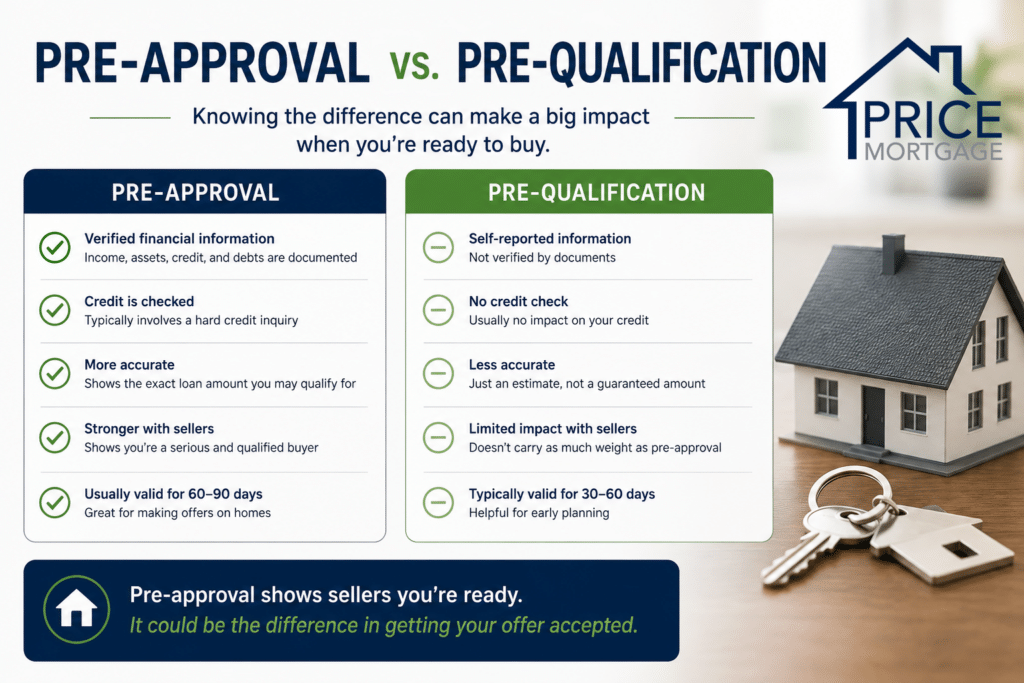
Pre-approval is a documented review of your ability to qualify for a mortgage based on information available today. A loan officer typically reviews your credit report, employment and income, available funds for down payment and closing costs, debts, and the type of home you plan to buy. They then estimate a loan amount and monthly payment range, subject to program rules and final underwriting.
This differs from pre-qualification. A pre-qualification may rely largely on information you provide, sometimes without documentation or a full credit review. It can be a useful first conversation, especially when you are deciding whether to buy this year or next. But when you are ready to submit an offer, sellers and real estate agents generally place more weight on a true pre-approval.
The mortgage pre approval process in Arizona, step by step

Start with a loan conversation, not just a credit score
Many buyers think their credit score is the first thing that matters. It’s important, but it isn’t the whole story. Income, debts, available cash, and your goals all play a role in determining the right loan program.
Those details affect which loan programs may fit. Conventional, FHA, VA, jumbo, bank statement, ITIN, and other non-QM options have different guidelines. A borrower with a strong credit profile and 10% down may have different choices than someone preserving cash for a move or using a gift from family. There is no single “best” loan for every buyer.
A mortgage broker can compare programs available through multiple wholesale lending partners rather than limiting the conversation to one bank’s product menu. Depending on credit, income, property type, and lender guidelines, that can create useful alternatives when a borrower has an unusual income pattern, a condo purchase, or a tighter debt-to-income ratio.
Complete the application and authorize credit
The next step is a mortgage application. You will provide identifying information, your address history, employment history, income, assets, monthly debts, and details about the home you hope to purchase. Most mortgage pre-approvals include a credit review.
A hard inquiry can have a modest, temporary impact on credit, but mortgage credit-shopping inquiries made within a focused period are commonly treated differently than scattered applications for unrelated credit. Ask your loan officer how long the pre-approval is expected to remain valid and when a new credit report may be needed.
Provide documents that support the application
Documentation lets the lender verify what was entered on the application. Most W-2 employees should expect to provide recent pay stubs, W-2 forms, bank statements, and identification. If income includes bonuses, overtime, commissions, rental income, or a second job, additional documentation may be required to establish a qualifying history.
Self-employed buyers often need personal and business tax returns, business bank statements, and a current profit-and-loss statement. A lender may calculate qualifying income differently from the gross deposits or revenue shown in the business. That can be frustrating, but reviewing the documents early helps identify whether a conventional loan, bank statement loan, or another option may be more appropriate.
For down payment funds, the source matters. Large deposits, gifts, transfers between accounts, and cash deposits may need explanation and documentation. Keep a clean paper trail. If a relative plans to help, discuss the timing and documentation before moving money.
Review income, debts, assets, and payment scenarios
The loan officer calculates debt-to-income ratio by comparing recurring monthly debt payments with qualifying gross monthly income. Program limits vary, and lenders can have additional requirements. A borrower may qualify with a higher ratio under one program but have a more comfortable payment by lowering the purchase price or reducing other debt.
Assets are reviewed for the down payment, closing costs, reserves when required, and any earnest money deposit. Arizona buyers should also budget for inspections, appraisal costs, and the funds needed after closing. Down payment assistance may be available to qualifying borrowers, but these programs can have income limits, purchase-price limits, homebuyer education requirements, and property-location rules.
Receive the letter and use it strategically
Once the initial review is complete, you receive a pre-approval letter showing a maximum loan amount or purchase price, along with conditions. Your agent may request a letter tailored to the amount of a specific offer rather than showing your full approved ceiling.
Read the conditions closely. Common conditions include providing updated pay stubs and bank statements, confirming employment, documenting a deposit, selling an existing home, or receiving an acceptable appraisal. A good pre-approval letter should not create false certainty. It should give you a practical path forward and make clear what still needs to happen.
Arizona details that can change the numbers
Arizona does not have one uniform housing market. A condo in Scottsdale, a new-build home in the East Valley, and a rural property outside Tucson can create very different financing questions. HOA dues can materially affect the monthly payment and debt-to-income ratio. Condo projects may need to meet lender eligibility standards. New construction may involve builder incentives, timing considerations, and decisions about whether to use the builder’s lender or compare other available options.
Property taxes are another factor. Arizona taxes are often lower than in some states, but the estimate should be based on the specific property rather than a broad assumption. A newly built home or recently sold property can have an assessed value that differs from the prior tax bill. Homeowners insurance can also vary based on location, coverage choices, and property characteristics.
If you are considering a property with solar panels, ask early whether they are owned, financed, or leased. A payment obligation or lease can affect underwriting and the title review. The same early-review approach applies to manufactured homes, properties with acreage, accessory dwelling units, and homes needing substantial repairs.
How to make your pre-approval stronger
The most effective approach is simple: provide complete documents early, be direct about income or credit questions, and preserve financial stability until closing. If your credit score is close to a program threshold, paying down a revolving balance may help, but do not move funds or pay off debt without discussing the effect with your loan officer first.
It also helps to separate “can qualify” from “should spend.” Consider your future plans. A buyer expecting childcare costs, a job change, or major home repairs may choose a lower payment even if the pre-approval supports more. That decision is personal, and a clear loan comparison can make the trade-offs easier to see.
Common questions about Arizona pre-approval
How long does a mortgage pre-approval take?
A straightforward file can sometimes be reviewed within a day or two after all documents are received. Complex income, recent job changes, self-employment, or down payment assistance can take longer. Fast responses to document requests usually matter more than the initial application itself.
How long is a pre-approval valid?
Most pre-approvals are good for 60 to 90 days. If your home search takes longer, updating it is usually simple. We’ll just verify that your income, assets, and credit haven’t changed significantly.
Can I get pre-approved before choosing a real estate agent?
Yes. In fact, knowing your realistic payment range before touring homes can make the agent selection and home search more efficient. Your agent can then write offers with financing terms that match your approved program.
A pre-approval should leave you better informed, not pressured. If you are planning a purchase in Arizona, talk with one of our licensed loan officers about your income, funds, target area, and timeline so the loan strategy matches the home you want to buy.
